
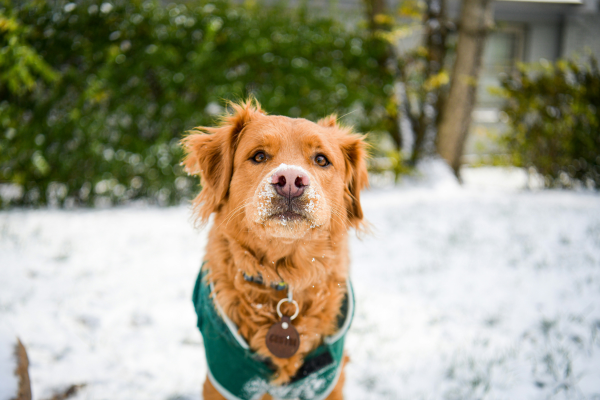
As we approach winter, we’re heading into weather that can affect both us and our dogs. With cold air and icy, slippery paths, it’s essential to understand how winter affects dogs and how to make sure we maintain their health, safety, and overall comfort throughout the season.
In this post, we help answer:
HOW DOES COLD WEATHER AFFECT DOGS?
Cold weather can affect dogs because of how they lose heat, which is primarily through their extremities (e.g., ears, paw pads, and tail). Other factors, like respiration/panting, can also cool a dog down, lowering overall body temperature and requiring more energy to stay warm.
To determine how cold weather can impact your dog, it is important to consider their skin, coat, and body size:
- Skin: If a pup’s skin becomes dry or irritated, which is common in cold, winter months, their skin barrier can weaken and allow heat to escape more easily. Regular grooming and hydration are important for maintaining healthy skin.
- Coat: Just as humans have different options for winter coats, a dog’s coat can vary significantly, affecting their response to cold weather. Some breeds, like Huskies and German Shepherds, have double coats with an undercoat that traps warm air next to their bodies. Single-coated or short-haired breeds, such as Greyhounds and Chihuahuas, do not have this undercoat, so they can lose heat more quickly. Age and medical conditions can also impact heat retention regardless of coat type.
- Body size: Depending on whether you have a large or small dog, heat can escape more quickly. Factors like body fat and surface area-to-volume ratio can impact their amount of “insulation.” For instance, smaller breeds have more surface area compared to their size, which can cause heat to escape more quickly, while larger breeds can retain heat more efficiently because of their lower surface area relative to body mass. Short-legged breeds, such as dachshunds, for example, can also feel cool more quickly because they’re closer to the cold ground.
Your dog’s fur may also be susceptible to getting wet from the snow. Damp fur in cold weather can quickly turn to frozen fur, which can keep your dog cold.
WHAT ARE SIGNS A DOG IS GETTING TOO COLD?
It is crucial to spot how your dog responds to cold weather whenever you spend time outdoors this winter, even if it’s for a short walk, as the snowy climate can impact your pup’s overall health without close observation.
External signs your pup is getting too cold can include slight shivering, whining, slowing down, weakness, or refusing to move. If you notice changes to their behavior, it is important that you bring them indoors right away so they can rest in a warm, dry space.
If a dog remains cold for an extended period and their internal temperature drops below the normal range of 101° to 102.5° Fahrenheit, they may develop hypothermia. The initial, moderate signs of hypothermia include slight shivering, lethargy, pale gums, and muscle stiffness. As the condition worsens, severe signs may occur, such as that they stop shivering (as the body can no longer generate heat) and experience shallow or slow breathing, a weak pulse, and dilated pupils (among other signs).
In the unfortunate event that a pup experiences hypothermia, it is important to remove them from the cold environment and seek immediate veterinary care.
HOW TO PROTECT A DOG’S PAWS IN THE SNOW
Even though they might seem tough, a dog’s paws are quite sensitive. Whether they’re on a walk or playing in the snow, there are various ways to help protect their paws:
- Consider dog winter boots: Well-fitted booties are a great way to protect dog paws from the cold. They can also help improve their traction on slippery surfaces. Getting your dog used to booties may take some time, but the long-term benefits are significant.
- Use protective balms/wax:Balms can act as a barrier against cold and rough surfaces, helping keep their paw pads protected and prevent cracking. Consider Dogtopia’s 3-in-1 Balm to help keep your pup’s paws moisturized this winter.
- Wipe down your dog’s paws after time outdoors: After every walk or play session outside, wipe their paws with a damp cloth to remove any salt or chemical residues that might have latched on from the snow, as it can cause skin irritation. You can also use this time to check for any lodged debris or dry, cracked paw pads.
- Trim their fur around their paw pads: Excess fur can trap snow and ice, making it difficult to walk and remove. Trimming this excess fur can help prevent this build-up.
WHAT HAPPENS IF DOGS EAT SNOW?
In most cases, the occasional small nibble on snow won’t harm a dog. However, there are potential hidden dangers in the snow that make it not an ideal snack.
When dogs eat large amounts of snow, it can irritate their stomach lining, lower their body temperature, and lead to vomiting or diarrhea. If you find you need to frequently stop your pup from eating snow, it could be a sign they’re thirsty, so providing clean drinking water throughout the day is key.
One major concern about eating snow is its potential contamination. From antifreeze and other harmful chemicals to salt and debris (which could cause choking), ingesting this can harm pups. For example, antifreeze can be fatal, while road salt or other products used to melt ice can cause mouth and throat irritation. Be on the lookout for signs your dog may have ingested something they shouldn’t, such as drooling, vomiting, or lethargy, and contact your vet right away.
SHOULD DOGS WEAR WINTER JACKETS TO PLAY IN THE SNOW?
While some pet parents may purchase their dog winter gear for adorable aesthetic purposes, it can also be an option if you live in snowy conditions and if your pup loves to play in the snow.
A winter jacket can be especially great for short-haired dogs, puppies, and older dogs that have trouble retaining heat. It can also help minimize snow and ice build-up that can mat on their fur.
When choosing a winter jacket, be sure to look for options that fit well by measuring your pup’s back length, chest, and neck circumference. You want to make sure nothing feels too tight so that they still maintain their full range of motion. For warmth, look for jackets that offer insulation and a waterproof or water-resistant outer material. While wearing it, be sure their collar/harness and ID tag(s) remain visible and secure.
HOW LONG CAN DOGS STAY OUTSIDE IN THE WINTER?
This will depend on your dog and their tolerance. Limit time outdoors when temperatures are particularly low, but it is always best to keep an eye on their behavior for any duration.
How cold is too cold? It will depend on your dog’s age, size and breed. However, temperatures that dip to 20° Fahrenheit and below are potentially dangerous for dogs of any size or breed. Check out this guide for more information.
If you find your dog plays less and is not as social in the winter because of the weather, or you are looking for a safe, inviting space for your pup to enjoy without the worry of outdoor dangers, Dogtopia daycare can be the solution!
We have secure, separate playrooms based on size and temperament, climate-controlled facilities to maintain a comfy playtime temperature and engaged Canine Coaches who will interact with pups to keep them active and happy.
Book your pup’s Meet & Greet to see if daycare is the right fit for them by finding a Dogtopia location near you.
This blog was reviewed/edited by Dogtopia’s Director of Health & Safety Lorraine Rhoads, an experienced animal biologist and environmental scientist.








Discussion about this post