
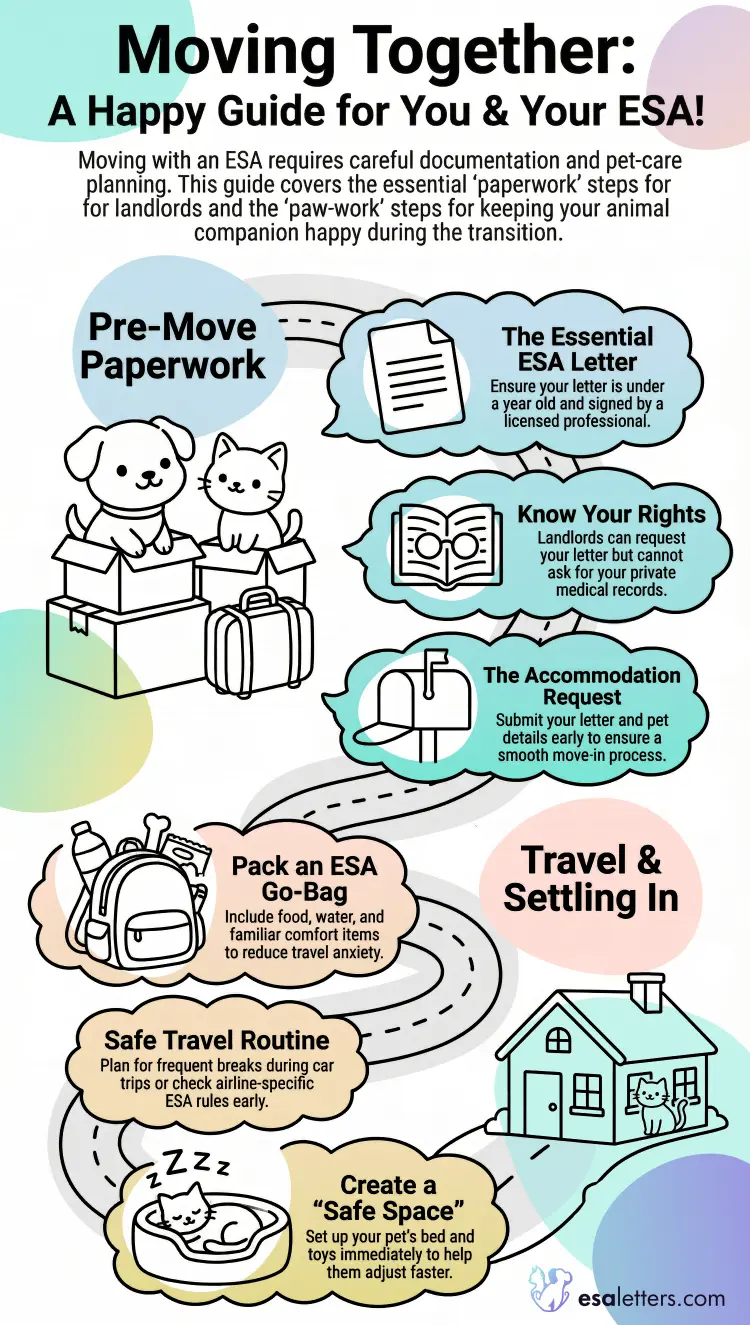
Moving with an emotional support animal takes a little more planning than a typical move, but it is very doable. The most important things are making sure your ESA letter is valid, understanding your housing rights under the Fair Housing Act, communicating with your landlord, and preparing your animal for the stress of relocation. If those pieces are in place, moving with an ESA dog or cat is usually straightforward.
For many people, the bigger challenge is emotional. Your ESA is often the one constant during stressful life changes. When moving across state lines with your own ESA, people often think, “If my doggo settles in, I will settle in.” That bond is exactly why planning the move around your animal matters.
In this article:
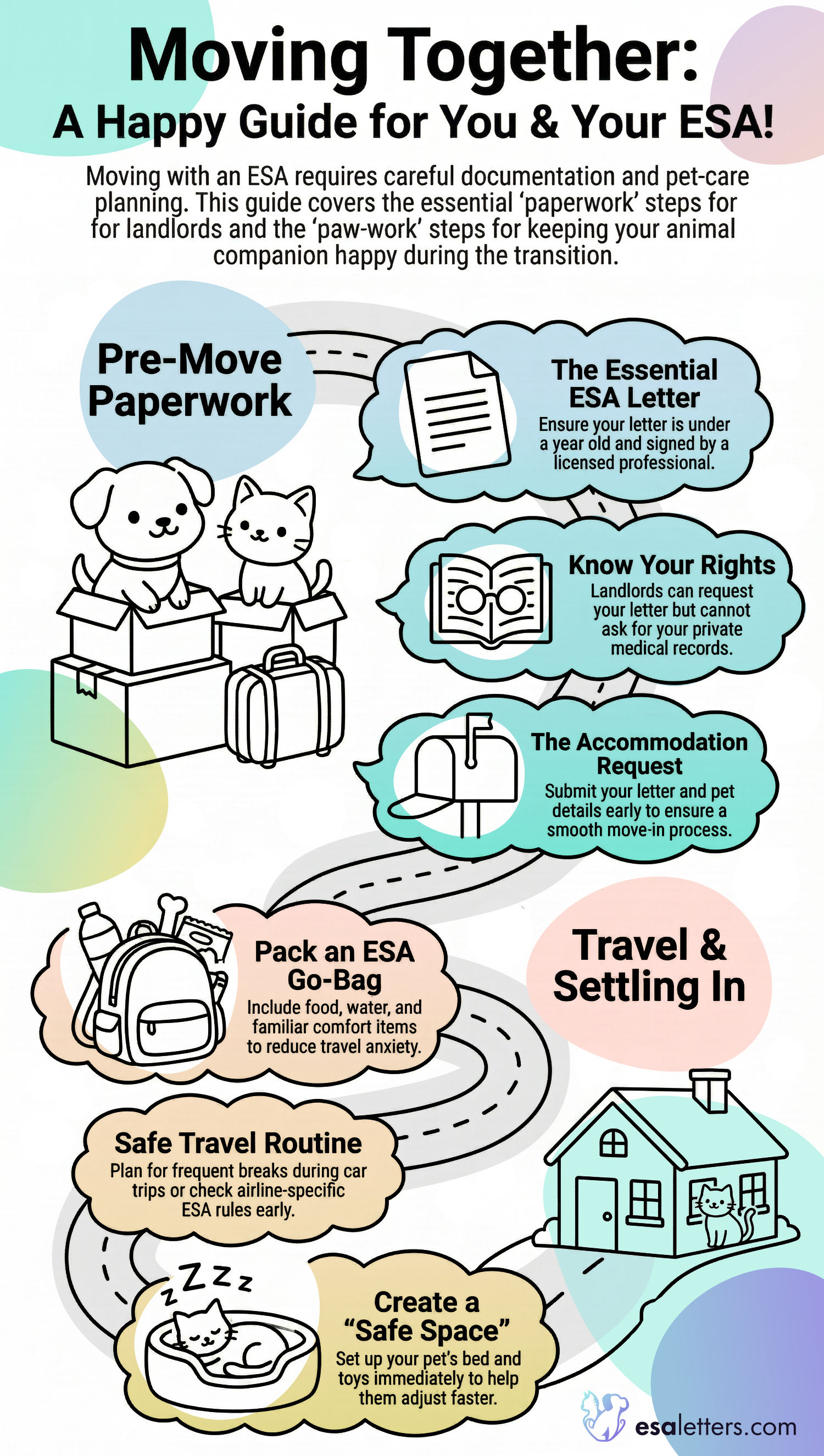
Make Sure Your ESA Letter Is Ready Before Moving
Your ESA letter is the most important document when relocating with an emotional support animal. Without it, landlords do not have to recognize your ESA.
What Your ESA Letter Must Include
A valid ESA letter should be issued by a licensed mental health professional. If you don’t have one yet or need to update it before moving, this guide explains how to get an ESA letter and what makes the documentation legally valid. It should include:
- The professional’s license information
- Confirmation that you have a qualifying condition
- Confirmation that the animal provides emotional support
The letter does not need to include your specific diagnosis. Many landlords simply verify the provider’s license and confirm the letter appears legitimate.
Does an ESA Letter Work in Another State?
Yes. ESA letters are based on federal housing law, not state law. That means a valid ESA letter generally works when you move to another state. However, some landlords prefer letters that were issued fairly recently. If your letter is more than a year old, it may be helpful to renew it before moving.
When to Renew Your ESA Letter Before a Move
Updating your letter before relocation can prevent delays. Situations where renewal helps include:
- The letter is over one year old
- Your landlord requests recent documentation
- You are moving into professionally managed housing
Many mental health professionals recommend yearly updates anyway. It confirms the ESA still supports your treatment plan.
How to Tell a Landlord About an Emotional Support Animal
This is the step that makes many renters nervous. If you’re unsure how to approach the conversation, this guide explains how to give an ESA letter to a landlord and what to say. It does not have to be complicated.
When to Disclose Your ESA During the Rental Process
There is debate about the best timing. Some renters disclose their ESA during the application process. Others wait until approval. In practice, both approaches happen.
Personally, I prefer transparency early in the process. It avoids awkward conversations later.
Submitting an ESA Accommodation Request
A reasonable accommodation request can be simple. It usually includes:
- A written request explaining that you have an emotional support animal
- A copy of your ESA letter
- A request for accommodation under the Fair Housing Act
Most landlords process the request within a few days. Housing professionals often say the tone of the request matters. A respectful message tends to get a respectful response.
Documents Landlords Can and Cannot Ask For
Landlords can request:
- Your ESA letter
- Verification that the provider is licensed
Landlords cannot require:
- ESA registration certificates
- Training certificates
- Detailed medical records
Your privacy still matters!
Preparing Your Emotional Support Animal for a Move
Animals experience stress when moving, just like humans. Some handle it well, others struggle with the sudden change.
How Moving Stress Affects Emotional Support Animals
Dogs often become restless during moves. You might notice:
- Pacing
- Clinginess
- Extra barking
Cats usually respond differently. Many cats hide during packing and may refuse food the first day in a new home.
Tips to Help Your ESA Adjust to a New Home
Animals adjust faster when familiar routines stay intact. Helpful steps include:
- Keep feeding schedules the same
- Bring familiar bedding and toys
- Create a quiet space in the new home
For cats, starting them in a single room often works best. Once they feel safe there, they will explore on their own.
Moving Day Checklist for ESA Owners
Prepare a small bag for your ESA that includes:
- Food and treats
- Water bowl
- Medication
- Comfort toys
- Vet records
Having these items close prevents last-minute stress.
Traveling to Your New Home with an ESA
How you travel matters. Dogs and cats handle transportation differently.
Moving with an ESA by Car
Car travel is usually the easiest option. Helpful tips include:
- Take breaks every few hours
- Bring water
- Keep the temperature comfortable
Dogs benefit from a walk during stops. Cats often prefer staying in their carrier until arrival.
Flying with an Emotional Support Animal
Airline policies have changed in recent years. Many airlines no longer recognize emotional support animals as service animals.
Airline Rule Changes for ESAs
Most airlines now treat ESAs as regular pets. That means:
- Pet fees may apply
- Size restrictions apply
- Carrier requirements apply
Small ESA cats and dogs usually travel in the cabin. Larger animals may require other arrangements.
Preparing ESA Dogs and Cats for Flights
Before flying:
- Confirm airline pet rules
- Schedule a vet check
- Use a secure travel carrier
A familiar blanket inside the carrier can reduce anxiety.
Moving Across State Lines with an ESA
When relocating to a new state, bring your pet’s veterinary records. These may include:
- Vaccination records
- Microchip information
- Health certificates
Some states require updated rabies documentation. Your veterinarian can confirm requirements before the move.

Choosing ESA-Friendly Housing in a New City
Not all landlords are familiar with emotional support animal rules. Finding housing that understands ESA accommodations makes the process easier.
How to Find ESA-Friendly Apartments
Look for:
- Large apartment communities
- Professional property managers
- Housing that already allows pets
These landlords are usually more familiar with assistance animal policies.
Questions to Ask Before Signing a Lease
Ask direct questions. Examples include:
- How does your property handle assistance animals
- Where should accommodation requests be submitted
- Is there a specific contact person for ESA documentation
Clear answers early reduce stress later.
Red Flags That a Landlord May Resist ESA Requests
Certain responses are warning signs. Examples include:
- Requesting ESA registration papers
- Demanding pet deposits for ESAs
- Refusing accommodation requests without explanation
Those practices often conflict with housing law.
Common Problems When Moving with an ESA
Even well-planned moves can run into obstacles.
Landlord Pushback or Delayed Approval
Sometimes landlords delay ESA accommodation requests. This often happens because they are unsure about the law. Providing clear documentation usually resolves the issue.
ESA Documentation Disputes
Occasionally, landlords question ESA letters from online providers. When that happens, verification of the provider’s license typically settles concerns.
Adjusting to New Housing Rules or HOA Policies
Some buildings have strict community rules. Even though ESAs must be allowed, owners still need to follow basic responsibilities. Animals must remain under control and cannot create disturbances.
FAQ About Moving With an Emotional Support Animal
Usually no. ESA letters are recognized under federal housing law, so they still apply when you move to another state. However, some landlords prefer letters written within the past year. Renewing your ESA letter before moving can prevent delays during the rental process.
You can disclose your ESA at any point before moving in, but some renters mention it after their rental application is approved. At that point, you can submit your ESA letter and request a reasonable accommodation under the Fair Housing Act.
Yes. Emotional support animals are not considered pets under the Fair Housing Act. Landlords must usually allow an ESA even in buildings with strict no-pet policies, as long as you provide proper documentation.
Most moves only require basic veterinary records, such as vaccination history. If you are flying or crossing state lines, airlines or local regulations may require additional health documentation from a veterinarian.







Discussion about this post