
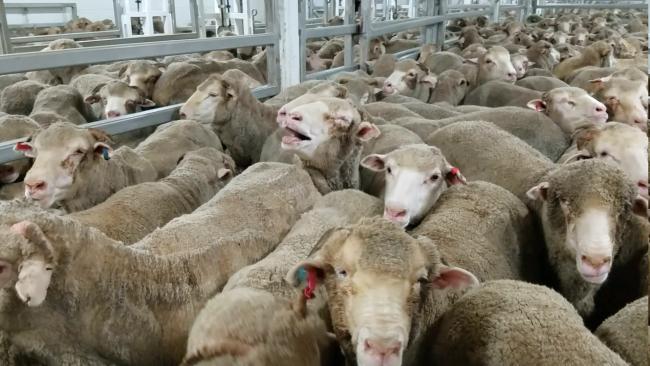

Exposed to rocket fire and air strikes. Mishandled or abandoned by frightened workers while they remain in small, cramped vehicles, left alone to face the mayhem.
These are the kinds of experiences animals face when transported to or near active war zones, including Israel, Lebanon, Jordan, Kuwait, Oman, and Saudi Arabia. Chaos can descend quickly at the major ports in these countries due to the unpredictable nature of conflict, putting the lives of both the animals and the humans working with them under threat.
The consequences of live transport to war zones are not limited to what happens at the ports, either. Port closures due to conflict happen frequently, leading to animals being left adrift at sea for up to weeks in growingly desperate circumstances, as was recently the case with the vessel, Express M. Food and water can run out, conditions can become filthy, and injuries and illnesses become more common while at sea for long periods.
Animal protection organisations say no to sending animals to war zones
Over the past several years, dozens of animal protection organisations including Eurogroup for Animals, Animal Welfare Foundation, Project 1882, FOUR PAWS, Essere Animali, Ethical Farming Ireland, Compassion in World Farming and Animal Welfare Observatory have written or signed open letters to the European Commission, as well as to key decision-makers like Commissioner for Health and Animal Welfare, Olivér Várhelyi, calling on them to stop transporting animals to war zones in light of the unignorable risks.
So far, no EU-wide suspension of these journeys has been forthcoming. It is difficult to understand the reasons why, especially considering there are viable alternatives. For example, Israel has certified an operational slaughterhouse in Portugal to facilitate the transport of meat and carcasses instead of live animals: an approach that directly addresses the fragility of this trade amid the ongoing hostilities, and that has proven to be more profitable for the European Union. Furthermore, the German ‘Land’ Niedersachsen recently enacted a ban on sending animals to war zones, as “the safety of… transported animals [can] no longer be adequately guaranteed”. There is no reason why the European institutions cannot, and should not, follow in its footsteps.
Over 25,000 citizens have called on the European Commission to suspend these unethical routes
While demands for action from NGOs have so far gone largely ignored, two new petitions by the animal protection organisations, Welfarm and Animal Welfare Foundation, have recently empowered citizens to back this urgent ask.
The petitions, which have so far been signed by over tens of thousands of people, reflect the messages in a recent letter to Commissioner Várhelyi, encouraging him to:
- Immediately call on Member States to suspend the export of live animals to Israel and other destinations in the Middle East affected by continuous hostilities, until the security situation has stabilised and compliance with EU animal welfare rules can be effectively guaranteed;
- Closely monitor vessels that have already departed, and ensure contingency measures are in place to prevent animals from being left in unsafe conditions;
- Assess, as a matter of urgency, the systemic shortcomings that allow exports to proceed despite clearly foreseeable and serious risks.






Discussion about this post