
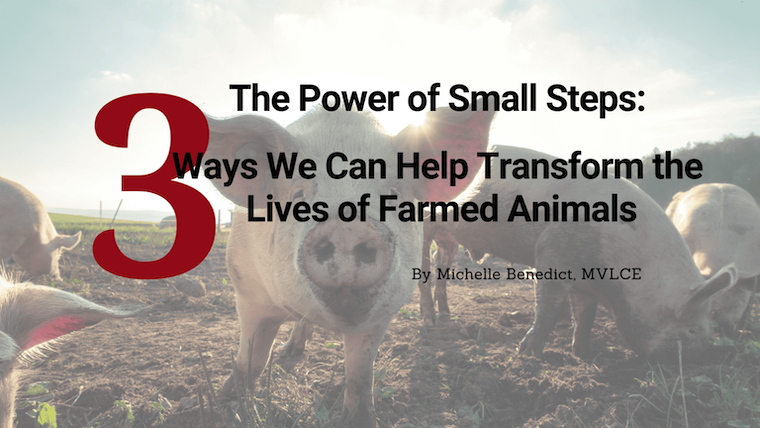
Michelle Benedict suggests three simple ways you can make a difference for farmed animals and help shift the cultural narrative towards compassion for all beings.

Image from MainStreetVegan.com
Originally printed in the Main Street Vegan blog, MainStreetVegan.com.
I wish I had a dollar for every time I explain to friends, new acquaintances, family, et cetera, where I work and what I do. The response is always the same, Oh, I just LOVE dogs/cats/insert anything but a farmed animal. When I respond, Yes, I love them, too, but my organization advocates for farmed animals, their eyes glaze over or they look away and shift the narrative to, Well, thats what those animals are there for, or Youre on the losing team ..
As vegans, its hard to relate to why animal lovers are anything but—choosing to love some animals but look away from the cruelty inflicted on many others. While going vegan is a major step to help animals, there are other steps we can take to continue to advocate for the sentient beings raised within the global food system, especially when we know that, sadly, most people—our friends, family members, neighbors—have no interest in following our path. How do we help improve the welfare of animals that will never see the light of day or know what being loved and protected feels like?
Three Ways to Help Farmed Animals
1. Think Beyond the Platethe Power of the Purse
My husband calls it armchair quarterbacking, but online petitions are a powerful tool to advocate for farmed animals. While we may not always be aware how our influence as consumers can extend to advocating for meaningful change, the corporations that control the supply chains of billions of animals are highly responsive to consumer pressure.

Image credit: Mercy For Animals
By supporting organizations, such as Mercy for Animals, that run effective corporate campaigns, we can amplify the call for better animal welfare standards, such as the elimination of barren battery cages for hens, gestation crates for pigs, and other extreme confinement practices. These campaigns have a tangible, immediate impact on the lives of farmed animals by setting baseline welfare improvements that would otherwise be politically difficult to achieve.
I encourage my friends and family to support petitions for companies to keep their promises to reduce animal suffering, and encourage restaurant chains to add more plant-based alternatives to their menus. Taking a few moments to forward a link to a petition could make the difference in a farmed animals short life.
2. Advocate for Animals with Your Elected Officials
We can amplify our advocacy for farmed animals by engaging with local, state, and national government representatives to support laws that ban cruel farming practices and promote animal protection. Successful campaigns, such as those that banned the sale of products from extreme confinement systems, demonstrate the power of collective political will. Simpler actions, like signing petitions, calling your elected officials, or participating in organized letter-writing campaigns, play a vital role in shifting the landscape and ensuring that the welfare of farmed animals is taken seriously in public policy.
3. Change the Narrative, One Story at a Time
Storytelling is an impactful way to advocate for farmed animals. I dont mean making your friends watch footage of the horrors that go on in a factory farm; this can be too traumatizing, for even the most ardent carnivore. My organization released a short animated film, Henrietta Finds a Nest, in the fall of 2025. This film, based on a true story which you can see here, focuses on the bond between a rescued chicken and a compassionate young girl.
This film is a great conversation starter about compassionate food choices. Everyone can relate to a story about a beloved animaland I believe Henrietta Finds a Nest has already begun to open hearts and minds, prompt conversations about animal rights, and promot a deeper understanding of animal sentience to create a cultural shiftone person at a time.
We know its hard to be vegan in a non-vegan world. Working to help farmed animals is like trying to boil the ocean. There are days I feel defeated and there are days where I feel inspired to keep fighting. We cant forget: We are their only voice. If we stop fighting, if we give up, then we truly are on the losing team.
By Michelle Benedict, trained and certified as a vegan lifestyle coach and educator by Main Street Vegan Academy, www.MainStreetVegan.com
Michelle Benedict is a graduate of Main Street Vegan Academy and is Events Manager for Mercy For Animals, a non-profit organization that advocates for farmed animals around the world. Prior to joining Mercy For Animals, Michelle held a variety of roles in the financial industry, making a major career change in 2022 to devote the rest of her career to helping farmed animals. Michelle lives at the Jersey Shore with her husband and two very bossy parrots. Connect with Michelle on LinkedIn.

Photo credit: Michelle Benedict
Posted on All-Creatures.org: December 24, 2025
Return to Animal Rights/Vegan Activist Strategies
Read more at Meat and Dairy Industries








Discussion about this post