
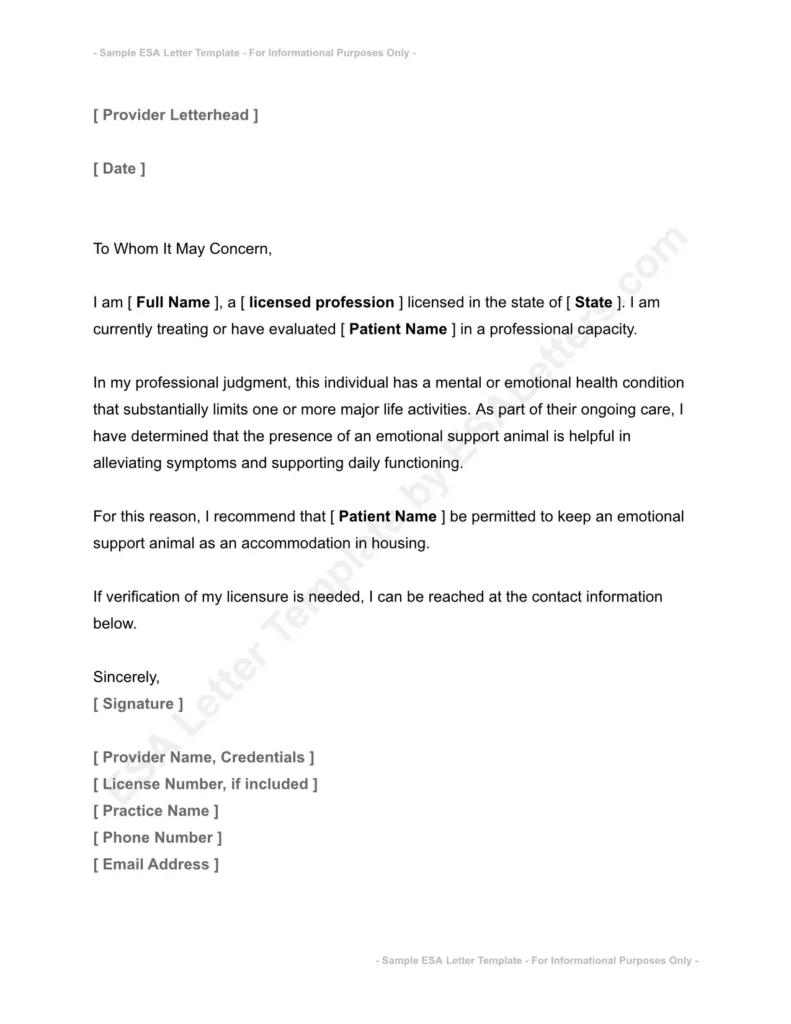
An ESA letter template for healthcare professionals provides a clear example of how to write an ESA letter that supports a patient’s need for an emotional support animal for housing. The letter should confirm that the patient has a mental or emotional health condition and that the animal helps relieve symptoms related to that condition. A good template keeps the letter clear, professional, and legally useful, but it must still be based on your own clinical judgment and your relationship with the patient.
For readers trying to understand the patient side of the process, here’s a clear guide to getting an ESA letter.
In this article:
What an ESA Letter Template Actually Is
An ESA letter template is a starting point for healthcare professionals to cover the basics of an ESA letter in a clean, professional way. The letter includes your name, license information, your relationship to the patient, and your professional opinion that the patient benefits from an emotional support animal as part of their care.
Healthcare professionals ask for templates because they don’t want to miss anything important. That makes sense. A lot of providers feel uneasy with ESA requests at first, not because they don’t care, but because they don’t want to write something vague, incomplete, or easy for a landlord to reject.
I’ve heard that concern from both sides. Providers worry about doing it wrong. Patients often feel nervous about even bringing it up. Some ESA handlers have said the conversation felt awkward or even humiliating because they were scared their provider would think they were exaggerating. A clear, thoughtful letter can take some of that tension out of the process.
If you want to see how patients may start that conversation, this guide on how to ask a therapist for an emotional support animal letter is a natural next read.
Who Can Write an ESA Letter
In general, an ESA letter should come from a licensed healthcare professional who is qualified to evaluate and treat the patient’s mental or emotional condition and is acting within their scope of practice.
That may include:
- Licensed therapists
- Psychologists
- Psychiatrists
- Licensed clinical social workers
- Counselors
- In some cases, physicians or other licensed medical providers are involved in the patient’s care
The key issue is whether you’re licensed, whether you know the patient well enough to make the recommendation, and whether the recommendation is supported by your professional judgment.
That part matters. A template is helpful. A generic letter written without a real assessment is not.
What to Include in an ESA Letter
A strong ESA letter should be brief, specific, and professional. It doesn’t need to read like a legal memo. It also doesn’t need to reveal every detail of the patient’s diagnosis.
Here’s what should usually be included:
- Your professional identity
Include your full name, credentials, license type, license number if appropriate, and the state where you’re licensed. - The date of issue
ESA letters should be current. An old letter can raise questions, especially in housing situations. - Confirmation of a therapeutic relationship or evaluation
State that you are treating the patient or have evaluated them in a professional capacity. - A statement about the patient’s condition
You don’t need to disclose the full diagnosis in detail. In many cases, it’s enough to state that the patient has a mental or emotional health condition that substantially affects one or more major life activities. - A statement that the emotional support animal helps
This is the heart of the letter. You should explain that the animal provides support that relieves symptoms or lessens the effects of the condition. - Your recommendation
State clearly that, in your professional opinion, the patient benefits from having the emotional support animal as part of their treatment or symptom management. - Your signature and contact information
The letter should be signed and include a way to verify that it came from a real licensed provider.
What Not to Include
This is where many providers overdo it.
You usually don’t need to include:
- Detailed psychotherapy notes
- A full diagnostic history
- Medication history
- Trauma details
- Broad statements that go beyond your role
Keep it focused. The goal is to support the disability-related need for the animal, not to hand over the patient’s private life.
Patients are often already feeling exposed during housing disputes. A careful letter can protect their privacy while still doing its job.
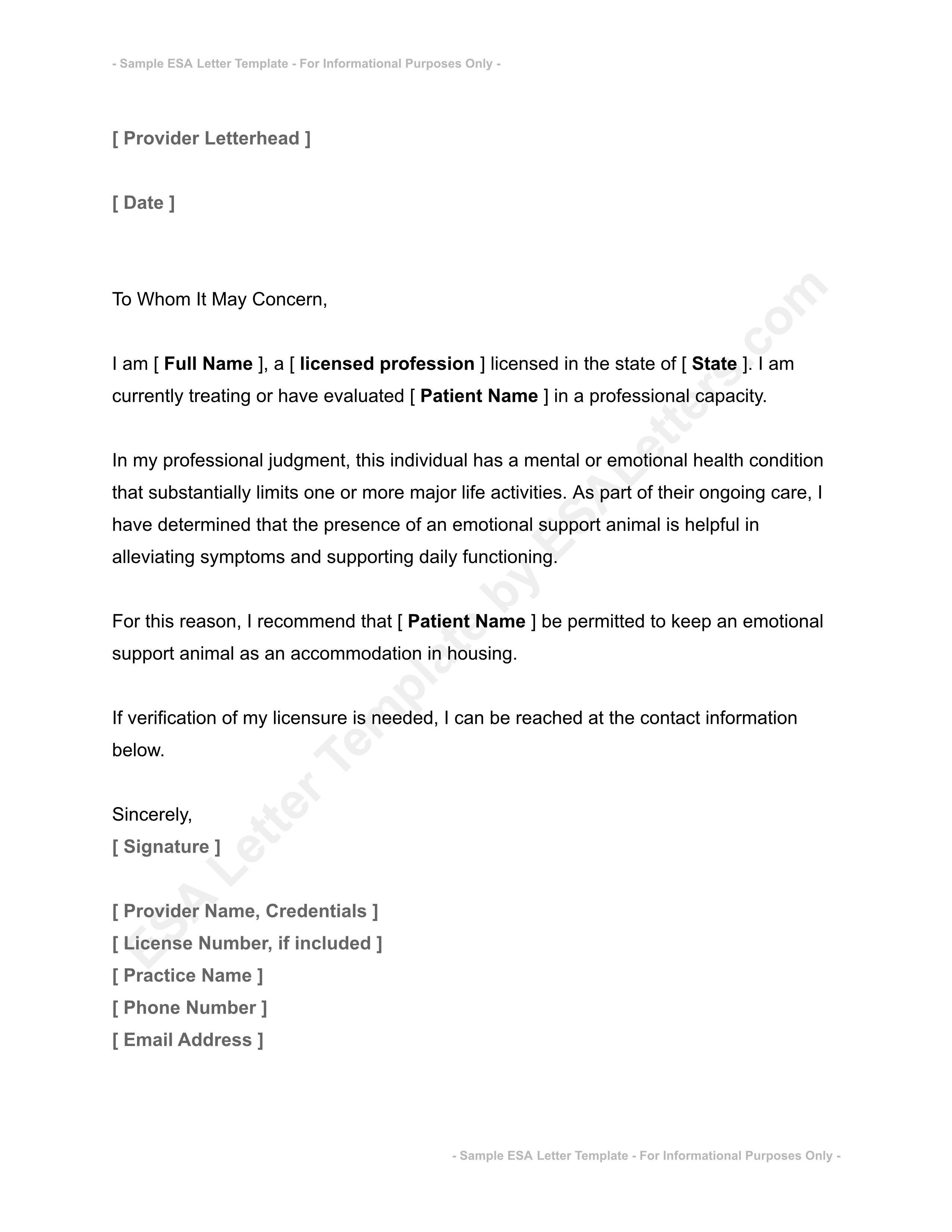
ESA Letter Template for Healthcare Professionals
Below is a simple template that can be adapted to fit your clinical role and the patient’s situation:
Common Mistakes Healthcare Professionals Make
Using a generic template without personalizing it
This is the biggest mistake. A template should sound like a real provider wrote it for a real patient, not like it was copied from a random website.
Leaving out credentials or contact details
If the letter does not clearly identify you as a licensed professional, it loses credibility fast.
Including too much private information
Some providers think more detail equals more authority. Usually, it just creates privacy problems.
Recommending an ESA without enough clinical basis
This is where discomfort is justified. If you do not have enough information to support the recommendation, it is better to say so than to write a weak letter.
Confusing ESA rights with service dog rights
The letter should not suggest that the animal has broad public access rights or special training status if that is not true.
FAQ About ESA Letters for Healthcare Professionals
It should be. Letterhead helps show that the document is legitimate and professionally issued.
Not usually. You can confirm a qualifying mental or emotional health condition without disclosing sensitive details.
They may try to verify that the letter is legitimate. That is one reason your contact information and credentials should be clear. For broader questions about documentation, renewal, and housing issues, readers can also review the full ESA Letters FAQ.
Yes. If you do not believe the recommendation is clinically supported, or if the request falls outside your scope or knowledge of the patient, you should not write it.
Some providers include the animal type or name, but many valid letters focus on the patient’s need rather than the pet’s biography. What matters most is the clinical recommendation.
That hesitation is common. Many healthcare professionals want to help but don’t feel comfortable writing ESA letters because they don’t know the patient well enough, aren’t confident the request is clinically supported, or simply prefer not to handle this type of documentation in their practice. If that’s the case, it’s better to be honest than to write a weak or unsupported letter.
You can also let the client know they may seek a licensed provider through ESALetters.com. That gives them another path forward if you’re not the right person to make the recommendation.






Discussion about this post