
By Kaitlyn Azemar, CPDT-KA, DCBEC
Adopting a new dog can be exciting, but it is not without challenge. Many rescue pups come with an unknown background that can affect their behavior. However, a little TLC and training can go a long way towards shaping your new rescue pup into the perfect family companion.
Decompression and Adjustment: The 3-3-3 Rule
Newly adopted dogs often show signs of stress soon after arriving home, which can confuse an adopter who selected their new companion based on the temperament shown at the shelter. Canine experts often cite the 3-3-3 rule, meaning it takes 3 days for a dog to decompress after coming home, 3 weeks for a dog to learn routines, and 3 months for a dog to feel truly at home. During this period, your dog may show out of character behaviors such as reactivity, anxiety, and destructiveness. Behaviors shown during this period are rarely indicative of a dog’s true temperament, and instead a reflection of an unsure dog in an unfamiliar environment. While every dog is different, this guideline is a tried and true way of measuring your new dog’s progress in their new home.
Creating Safety Through Predictability
Dogs thrive on consistency, routine, and predictability. Create a routine for your new family member and stick to it. Feed them at the same time every day. Take only familiar routes when on a walk and keep walking times consistent. Do a short training session or play session at the same time every day. Establish a morning and bedtime routine. This consistency will ease your pup’s anxiety by allowing them to accurately predict what comes next.
Give your dog a safe space in your house to retreat to. A crate, bed, or quiet room in your house can make all the difference. Teach them that when they go to this designated space, no-one will approach, interact with, or otherwise disturb them. This space should be off limits to all children, pets, and members of the household. Knowing they have a safe space to retreat to will help your dog self-regulate and decompress in your home. It can even aid in growing your bond!
Don’t Rush Bonding
While it may be tempting to shower your new family member with all the love, treats, and adventure they can handle, this will likely overwhelm your new pup, which can damage your bond, not grow it. Many rescue dogs need to feel safe before they are ready to embrace their new life with you. Never force interaction with your new pup. Allow them to approach you on their own terms, and do not pet, cuddle, or hug your new pup unless they ask for it. Sit on the floor calmly and ignore your pup until they choose to come in for cuddles. Trust is not built in grand gestures; it’s built in understanding.
While you may want to show off your new furry friend to the world, it is recommended to avoid visits from guests and busy public places for at least the first 3 weeks after taking your new dog home. These first 3 weeks are crucial in building a bond with your new dog and should be focused strictly on building trust and understanding. Once your dog is comfortable in your home, they can safely meet friends and other dogs. Inviting unfamiliar people into your home too early can delay your dog’s progress and make your home an uncertain place for your pup.
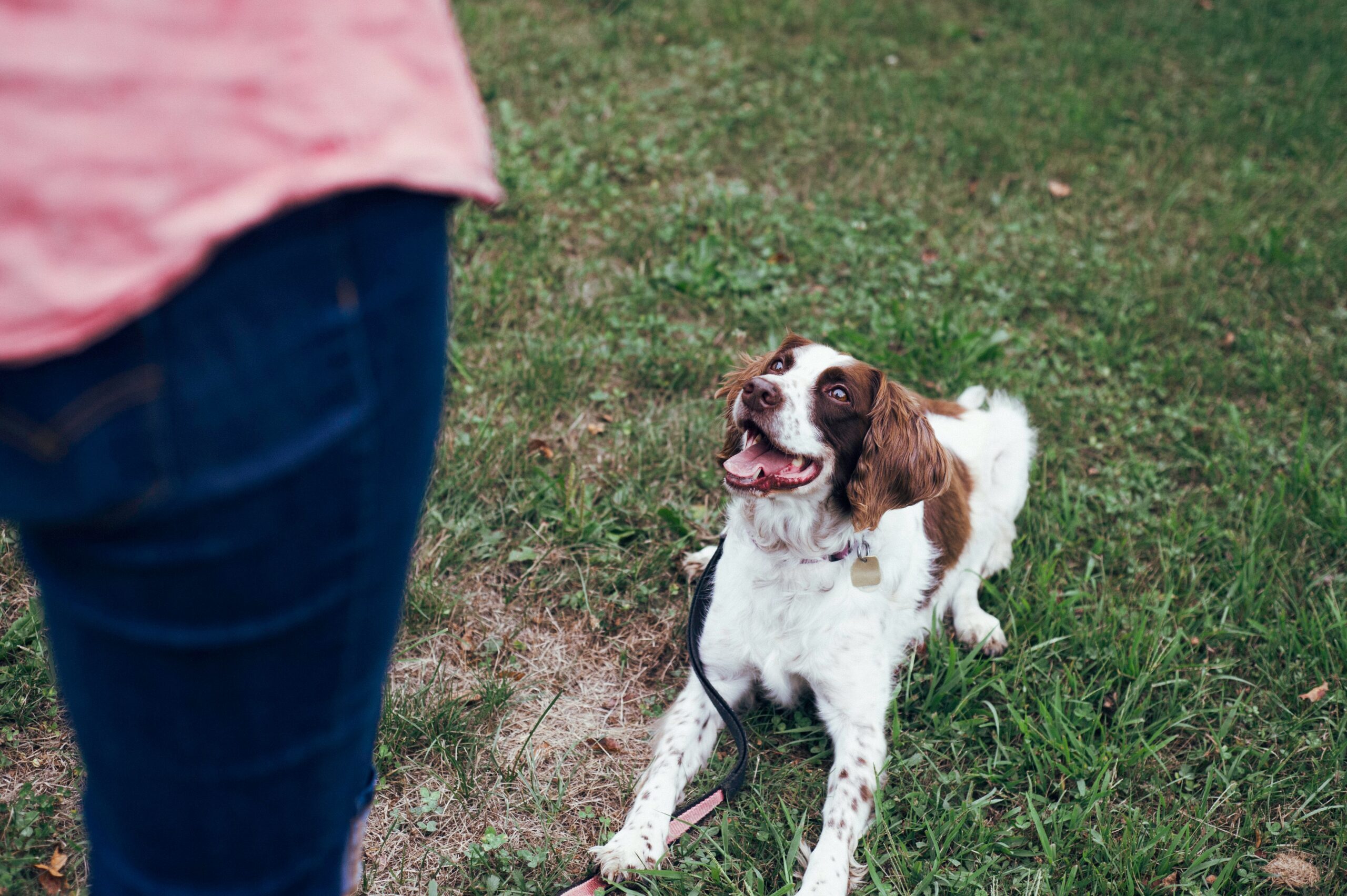
Play and training sessions are a great way to build a bond with your new dog. Start with slow, 5-10 minute sessions. Always make sure your dog is having fun and always end the session before your dog loses interest. If they are cowering, showing whale eye, lip-licking, or excessively panting, they are not ready for this step and need more time to decompress.
Expecting and Managing Stress Behaviors
As stated earlier, your dog may show signs of stress shortly after coming home. These behaviors include reactivity, pacing, unable to settle, potty accidents, barking or whining, and destructiveness. These are all perfectly normal and are likely to subside. Whether you’ve brought home a puppy or an adult, these behaviors should be managed by providing a safe space, closely supervising the pup when at home, redirecting unwanted behaviors onto appropriate outlets, and sticking to an established potty schedule.
When training your new family member, use only positive reinforcement techniques. Use treats, praise, and toys to reward calm behavior, eye contact, and teach cues like “sit” and “down.” Never use harsh corrections. Because most rescue dogs have an unknown history, harsh corrections can cause fear responses and damage trust. Studies show that teaching your dog what to do is more effective than correcting what you don’t want them to do.
Lean on Professionals
After the initial adjustment period, you are clear to use professional dog services such as training, daycare, boarding and other pet care services. If any behavioral issues persist, contact a CCPDT or Karen Pryor Certified Professional Dog Trainer to help mitigate these behaviors.
Dogtopia is the trusted name in open play daycare and overnight stay services, and for good reason! Each dog needs to pass an is extensive temperament test, or Meet & Greet, to ensure they are a good fit for open play, and our Canine Coaches are highly trained to help your pup become the best they can be. Daycare at Dogtopia is an excellent way to increase confidence in rescue pups and can aid in successful training and socialization at home. With almost 300+ locations in the United States, “the most exciting day ever” is waiting for you!
Reach out to your local Dogtopia to discuss how we can help you create a wellness routine for your dog today!







Discussion about this post